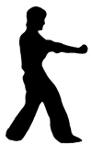
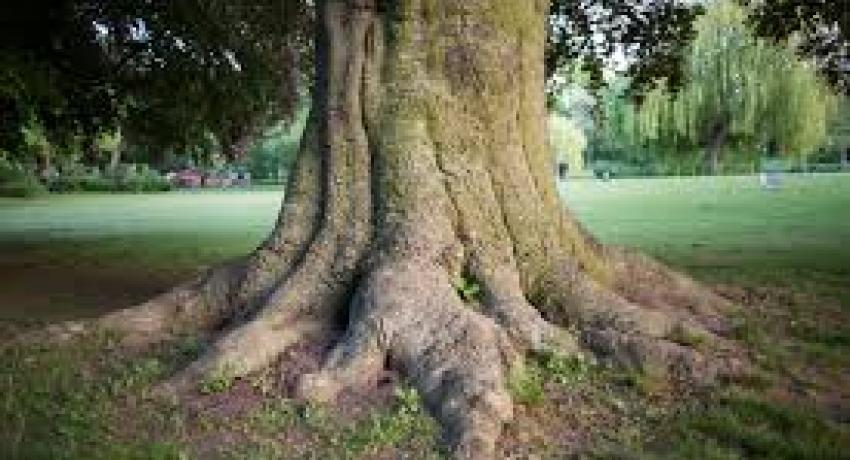
Grounding refers to the ability to subtly manage ones centre of mass in response to incoming and outgoing force through your whole body structure - channelling it down to, and up from, the ground.
'Grounding' is not the same as having a strong stance although developing the supporting muscles from static stances is required to enable it.
The grounding effect can feel to an opponent like you suddenly become immovable or impossibly heavy but in reality their force is being channelled straight to the ground and being resisted by the compressive resistance of your body which has been developed ever since you learned to walk upright as a child but requires you to have good posture in later life (which is not always easy to maintain!). This can only be developed through static stance training and dedicated practice with an opponent, a dummy or a wall bag, the latter works for hand strikes only.
In Siu nim tao the main stance is 'yee jee kim jeung ma' a higher type of 'horse stance' used by other Chinese martial art styles but with the knees and feet turned slightly inward. This stance represents the neutral or nexus stance from which all footwork develops and flows. Essentially while performing Siu nim tao you are training two 'back legs' for the biu ma front stance or juen ma (turning/pivoting stance). Practicing this stance strengthens the legs, trains proper angle of feet, knees and hips, supports the vertical alignment of the spine and allows development of proper triangulation and projection of force with the arms along the centre-line. This must be trained in a static position before moving or the proper grounding, triangulation and centre-line control will not be developed.
For more information check out our other articles
- Log in to post comments